Summary
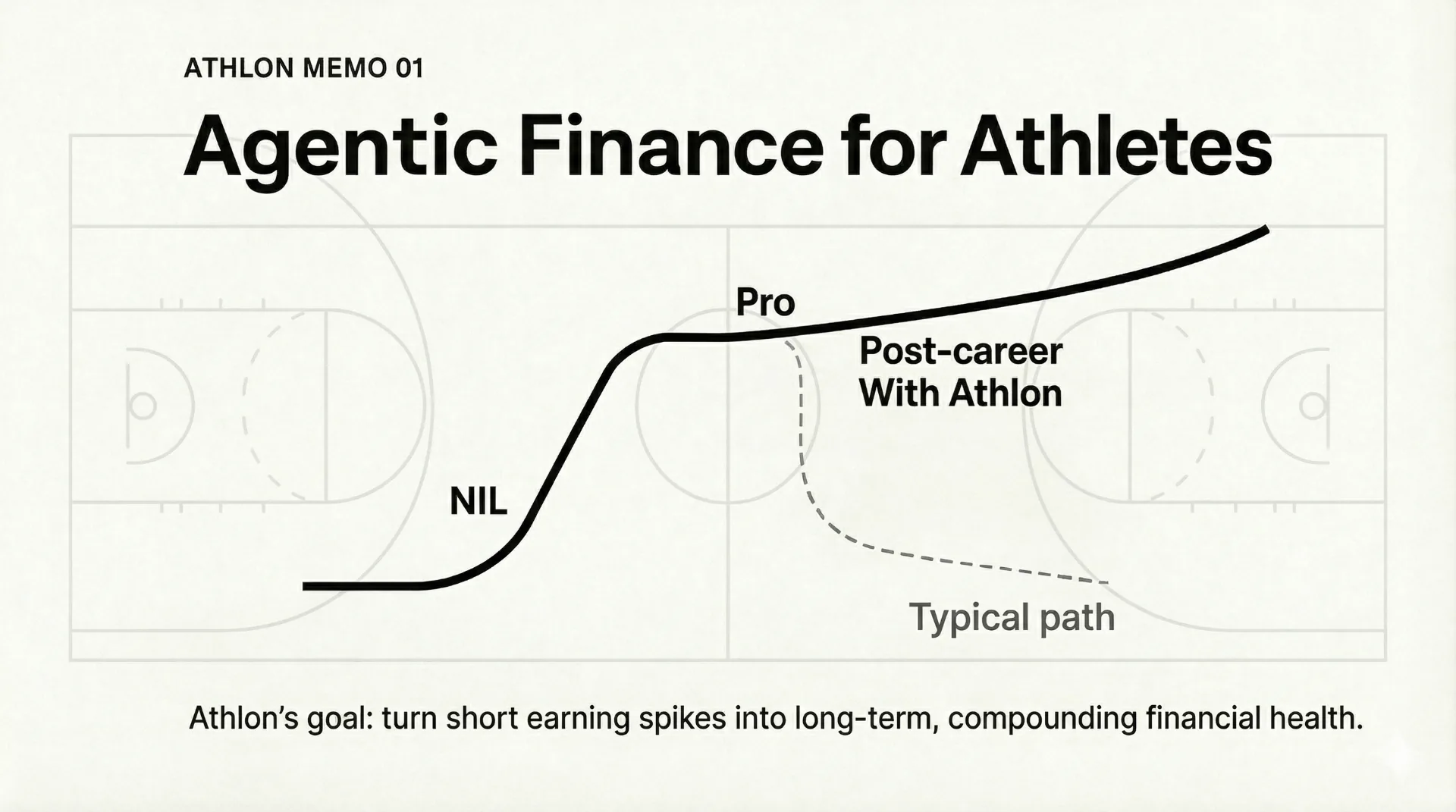
- Every important roster decision also creates a financial decision: what does this choice commit the program to, and what can the staff still do next?
- Available budget, committed amounts, paid amounts, remaining obligations, and uncommitted capacity are related but distinct.
- The trade-off between immediate impact, roster depth, and future flexibility should be visible before a commitment is made.
Every roster move starts with a sports question
Do we need another starting-caliber offensive lineman? Should we spend more to retain our point guard? Do we add one impact player or spread those resources across two or three positions?
Where are we thin? Who can we not afford to lose? Which need has to be solved now, and which can wait?
Those are coaching and roster-management decisions.
But in modern college athletics, nearly every important roster decision also creates a financial decision: What does this choice commit the program to, and what does it leave the staff able to do next?
That is the core idea behind college athletics roster budgeting: connecting roster priorities, team financial allocations, athlete compensation commitments, and payment obligations into one financial picture rather than managing them as separate conversations.
The coach does not need to become an accountant. The general manager does not need to replace the finance office. But the people building the team increasingly need to understand the financial consequences of the roster while they are building it.
Why college athletics roster budgeting matters now
The financial structure around college sports has changed quickly.
Following implementation of the House settlement framework, participating Division I institutions can provide direct financial benefits to student-athletes alongside the existing NIL ecosystem.
The Government Accountability Office reported that 330 of 352 Division I athletics programs spent more than they generated in athletics revenue during the 2023–24 academic year, underscoring the financial pressure surrounding these decisions.
At the same time, NCAA rules now address institutional benefits, roster limits, and noninstitutional NIL activity within the same broader operating environment.
For coaches, general managers, athletic directors, and finance teams, that makes one thing increasingly clear: roster management and financial planning can no longer operate independently.
A recruiting board can tell you what the team needs. A budget can tell you what resources have been allocated. A commitment record can tell you what the program has already agreed to. A payment history can tell you what has been fulfilled.
The important decisions happen where those views intersect.
A roster can fit on paper and still put the program in a difficult position
Imagine a college basketball program enters the offseason with three priorities:
- Retain its starting wing.
- Add a point guard.
- Improve frontcourt depth.
Then an experienced point guard becomes available. The staff likes him. The number is higher than expected, but the program can technically afford the offer.
Can the staff make it? Maybe.
But “we can afford the offer” is not the same as “this offer fits our roster plan.”
The staff still needs to understand how much has already been committed to returning players, how much it expects to reserve for the starting wing, whether spending more at point guard eliminates the second frontcourt addition, whether any athlete compensation carries into another season, and what happens if a retention number changes.
The offer itself may fit within the current team budget. The complete roster strategy may not.
That distinction is becoming one of the most important parts of college roster management.
How much roster budget is actually available?
Consider a simplified example.
A college football program has allocated $5 million toward athlete commitments. It has already entered into $4 million of commitments. Only $2 million has actually been paid.
How much remains available for additional roster commitments? It is not $3 million.
The unpaid portion of those agreements is still an obligation. For roster budgeting, the relevant question is how much of the allocation remains uncommitted, not simply how much money has not yet been paid.
That means several financial concepts need to remain distinct:
- Team allocation: the resources available for the roster plan.
- Committed amount: what the program has already agreed to.
- Paid amount: what has actually been paid against those obligations.
- Remaining obligation: what is still owed.
- Uncommitted capacity: what remains available for another roster decision.
Those numbers are related. They are not interchangeable.
The problem becomes much harder when each one lives in a different spreadsheet, system, or conversation.
Coaches and GMs need to see the opportunity cost
Every roster decision has an opportunity cost. That does not mean a program should always choose the cheapest option. It means the staff should understand what one decision makes harder to do somewhere else.
Suppose a football program has $1 million of uncommitted roster budget remaining. The staff is considering two approaches.
Option A commits $650,000 toward an experienced offensive lineman the staff believes can start immediately. Option B commits $450,000 across two additions that provide more depth and positional flexibility.
Both approaches fit within the available allocation. But they do not build the same roster.
Option A may solve the team’s biggest immediate problem. Option B leaves another $200,000 available for another position or retention decision.
Which one is right? A financial model cannot answer that for the coaching staff.
The coaches still need to evaluate the players. The general manager still needs to understand the market. The program still has to decide how much it values immediate impact, depth, development, and future flexibility.
But the financial trade-off should be visible before the decision is made. That is what good roster budgeting provides.
“The financial trade-off should be visible before the decision is made.”
Today’s athlete commitment can become next season’s constraint
One of the biggest mistakes in roster planning is looking only at the current season. An offer may fit today’s budget while reducing the program’s options next year.
Imagine two alternatives. One requires $600,000 this season and no additional commitment next season. Another requires only $450,000 this season but includes another $400,000 in the following season.
The second option costs less today. It may consume more of the flexibility the program needs to build next year’s roster.
That does not make the commitment wrong. Continuity may be exactly what the staff wants. The athlete may be important enough that the future obligation is worth accepting.
The problem is not making the commitment. The problem is discovering its impact after the commitment has already been made.
A useful view of multi-season commitments should make several questions easy to answer:
- What have we already committed?
- What does this proposal add this season?
- What does it add in future seasons?
- How much flexibility remains?
- Which other roster priorities could be affected?
Future roster flexibility is part of today’s decision.
The handoff between coaches, GMs, and athletics finance is where problems start
Most roster-budget problems are not caused by difficult mathematics. They happen because information changes quickly.
A general manager discusses an offer. The number changes. A roster spreadsheet gets updated. Someone in athletics finance still has the previous amount. Another athlete agrees to terms. The coaching staff begins considering the next roster move before every system reflects the first commitment.
Nothing has to be dramatically wrong. The information is simply moving faster than the handoff between people.
This becomes especially difficult when a college athletics department is simultaneously managing:
- Recruiting.
- Retention.
- Roster limits.
- Revenue sharing.
- NIL-related considerations.
- Current-season commitments.
- Future-season commitments.
- Athlete payments.
The answer is not necessarily another spreadsheet. It is a connected source of truth around the decisions that matter.
What should happen after an offer becomes a commitment?
The status of the information should change as the decision progresses.
A proposed offer should remain clearly identifiable as a proposal. A signed agreement should become a commitment. That commitment should have a clear payment schedule. Payments should reduce the amount still owed. Recording a payment should not erase the fact that the program committed the full amount in the first place.
That creates a straightforward operating sequence:
Roster scenario → proposed offer → approved commitment → payment schedule → payment history → updated roster capacity.
When the staff evaluates its next move, it begins from the latest financial picture rather than reconstructing the previous decision.
Why college athletics general managers sit at the center of this change
The rise of the college athletics general manager reflects how complex roster construction has become. Modern GMs increasingly operate between:
- Coaching evaluations.
- Recruiting.
- Roster construction.
- Athlete and representative conversations.
- Retention.
- Athletics leadership.
- Financial resource allocation.
That changes the central question. It is no longer only: Who do we want? It is increasingly: What is the strongest roster we can build with the resources available?
A good GM still needs to understand talent, fit, development, positional value, and team culture. But the role increasingly requires understanding how one commitment affects everything that comes next.
Roster strategy and financial strategy are moving closer together.
Athletics finance needs roster context too
The information needs to flow in both directions. Giving coaches more financial information is only half the solution.
Athletic directors, CFOs, and athletics finance teams also need to understand what the financial numbers represent.
A $500,000 athlete commitment is not simply another expense line. It might represent retaining a starting quarterback. It could fund several depth additions. It could be a future-season commitment the coaching staff considers essential for continuity.
Finance does not need to evaluate the depth chart. The coaching staff does not need to manage accounting.
But the strongest operating model gives coaches, GMs, athletic directors, and finance teams a shared financial picture of the roster while allowing each group to make the decisions that belong to them.
How AI can help with college roster management
AI-assisted roster planning can be useful in this environment without becoming the general manager. The valuable role for AI is helping staff understand the consequences of the priorities they already set.
A GM could ask: What happens if we spend more on an experienced starter instead of adding two depth players?
A basketball staff might ask: If we retain these three athletes, how much flexibility remains at point guard and center?
An athletic director might ask: Which existing commitments are putting the most pressure on next season’s roster allocation?
Those questions combine roster management and financial planning. AI can help calculate scenarios, compare alternatives, and explain trade-offs.
The staff supplies the player evaluations. The staff defines its priorities. The staff makes the final decision.
AI should make the consequences easier to understand, not replace the people responsible for building the team.
“AI should make the consequences easier to understand, not replace the people responsible for building the team.”
Better athlete-payment records benefit everyone
The department is not the only party affected by better financial organization.
An athlete may want to understand what was agreed to. A parent may want clarity around a payment schedule. An agent or manager may want to understand what has been paid and what remains outstanding.
Those questions should not require someone in the athletic department to reconstruct the agreement from several spreadsheets and email threads.
A clear athlete-payment record should make basic questions easier to answer:
- What was agreed to?
- What period does the agreement cover?
- When are payments scheduled?
- What has already been paid?
- What remains outstanding?
That does not mean an athlete, parent, or representative should see the athletic department’s complete roster budget or another athlete’s information.
It means the institution should maintain an accurate record behind the commitments it makes.
The goal is not to turn athletes into spreadsheet cells
There is an important distinction in all of this.
Planning a roster like a balance sheet does not mean treating athletes as financial assets. College teams are built by people.
Coaches care about fit. They care about leadership, culture, development, health, experience, and whether a group of athletes can win together.
There will always be situations where a staff intentionally commits more resources because it believes an athlete is worth that investment. That is exactly why the financial side should be clear.
Technology should not tell the program what to value. It should help the program understand what its decisions require.
Five questions to answer before the next major roster commitment
Before making the next significant athlete commitment, a program should be able to answer five questions:
- What have we already committed?
- What does this proposal add to this season’s roster budget?
- What financial commitment does it create in future seasons?
- Which other roster priorities become harder to address if we make this move?
- After an agreement is signed, how will we track what is owed, paid, and remaining?
If answering those questions requires several spreadsheets, old text messages, and multiple people trying to determine which number is current, the issue is not the staff. The information is fragmented.
What does “planning the roster like a balance sheet” mean?
Planning the roster like a balance sheet means giving coaches, general managers, athletic directors, and finance teams a connected view of the financial commitments behind roster decisions.
It does not mean using accounting rules to decide which athletes belong on the team. It means knowing what has been allocated, proposed, committed, paid, and left available before the next roster decision is made.
The depth chart tells the staff where the team stands. The recruiting board shows where it could improve. The budget defines the resources available. The commitment record shows what the program has already promised. The payment history shows what has been fulfilled and what remains.
Those should not operate as completely separate systems. They are all part of building the same team.
The coach still coaches. The GM still builds the roster. Finance still protects the financial health of the program. Athletics leadership still sets the broader priorities.
But everyone starts from the same financial picture.
In the revenue-sharing era of college athletics, that increasingly matters.
Frequently asked questions
College athletics roster budgeting connects roster priorities with allocated resources, proposed offers, signed commitments, scheduled payments, and future obligations. It helps staff understand both the competitive value and the financial effect of a roster decision before making it.
An allocation is the total amount available for a plan. Committed money reflects agreements the program has already made, while paid money reflects amounts already fulfilled. The amount still available depends on the allocation, current commitments, and any other obligations the department includes in its plan.
A decision that fits this season can reduce flexibility in a later season. Looking across multiple seasons helps coaches, GMs, athletics leaders, and finance teams see future obligations before they approve a commitment.
No. Coaches and roster staff remain responsible for evaluating players and setting team priorities. Roster budgeting gives them clearer financial context so they can compare trade-offs and understand what each option leaves available.
Once an agreement is approved, its payment schedule and status should remain connected to the original commitment. That gives authorized staff a clearer record of what was promised, what has been paid, and what remains due without exposing unrelated private information.
See what Athlon Pro can do
Explore roster alternatives and understand every commitment before you make it.
Request a Demo